Georgian Food: A Traveller's Guide to the Dishes You Have to Try
Ask anyone who has spent time in the Caucasus what surprised them most, and the answer is almost always the same: the food. Georgian food is one of the great undersung cuisines of the world, a tradition built on molten cheese, crushed walnuts, wild herbs and an almost competitive generosity at the table. It has been quietly perfecting itself for thousands of years at the meeting point of Europe and Asia, borrowing from Persian, Ottoman, Byzantine and Silk Road kitchens while remaining unmistakably its own. For travellers planning a first trip to Georgia, understanding what to eat, and how to eat it, is not a footnote to the journey. It is one of the main reasons to come.
This guide walks you through the dishes that define Georgian cooking, from the cheese breads and soup dumplings everyone has heard of to the walnut pastes, stews and mountain specialities that rarely make the guidebooks. Along the way it explains the rituals that give a Georgian meal its meaning, the regional differences worth chasing and the practical details that help you order well and eat like a local. By the end you should be able to walk into a Tbilisi restaurant, a Kakheti family cellar or a mountain guesthouse in Svaneti and know exactly what to ask for. Come hungry, because there is a great deal to get through.
Why Georgian Food Is One of the World's Great Cuisines
Georgia's cooking is shaped by its geography. Squeezed between the Greater Caucasus and the Black Sea, the country runs from subtropical coast to high alpine pasture, and that range gives its kitchens an extraordinary larder: citrus and tea from the humid west, walnuts and pomegranates from the valleys, sheep's cheese and cured meats from the mountains, and grapes almost everywhere. Layered on top of this is a location on the old trade routes, which brought spices, techniques and ideas from Persia, the Ottoman lands and beyond. The result is a cuisine that feels familiar and foreign at once, full of sweet-sour notes, fragrant herbs and combinations you will not have met before.
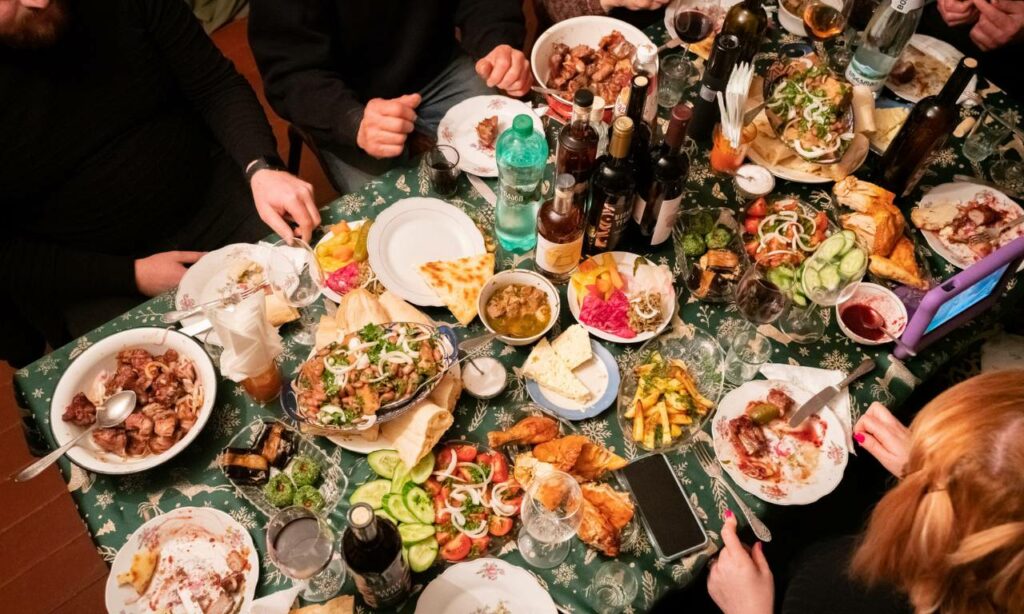
What truly sets Georgian food apart, though, is the culture of hospitality around it. Meals here are rarely small or solitary. The supra, the traditional feast, is the beating heart of social life, presided over by a tamada or toastmaster who leads the table through a sequence of heartfelt toasts to peace, family, ancestors and friendship. Wine flows throughout, which is fitting in a country widely regarded as the birthplace of winemaking, where the grape has been cultivated for some 8,000 years. To sit at a Georgian table is to be swept up in something generous and a little overwhelming, and visitors quickly learn that refusing food is far harder than accepting it.
"They could out-eat us, out-drink us, out-dance us, out-sing us."
— John Steinbeck, A Russian Journal
The sheer variety is the final surprise. This is not a one-note cuisine of grilled meat and bread but a deep repertoire that changes markedly from region to region and rewards the curious eater endlessly. Vegetarians, often poorly served elsewhere in the region, eat especially well here thanks to the abundance of walnut, bean, aubergine and herb dishes that developed around the Orthodox fasting calendar. Set against Georgia's other headline experiences, from the wine cellars of Kakheti to the mountains of Kazbegi, a proper exploration of its food holds its own as a reason to travel.
The Dishes That Define Georgian Cooking
Khachapuri, the National Obsession
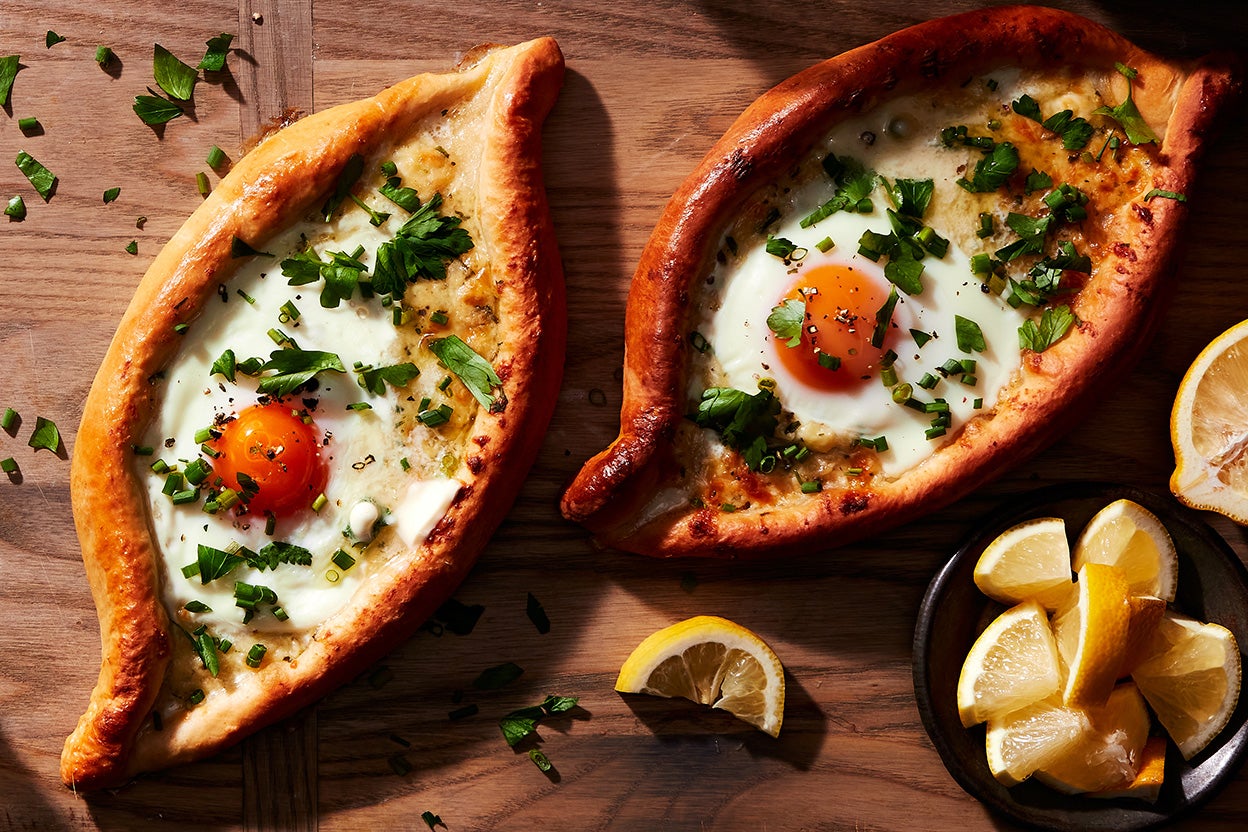
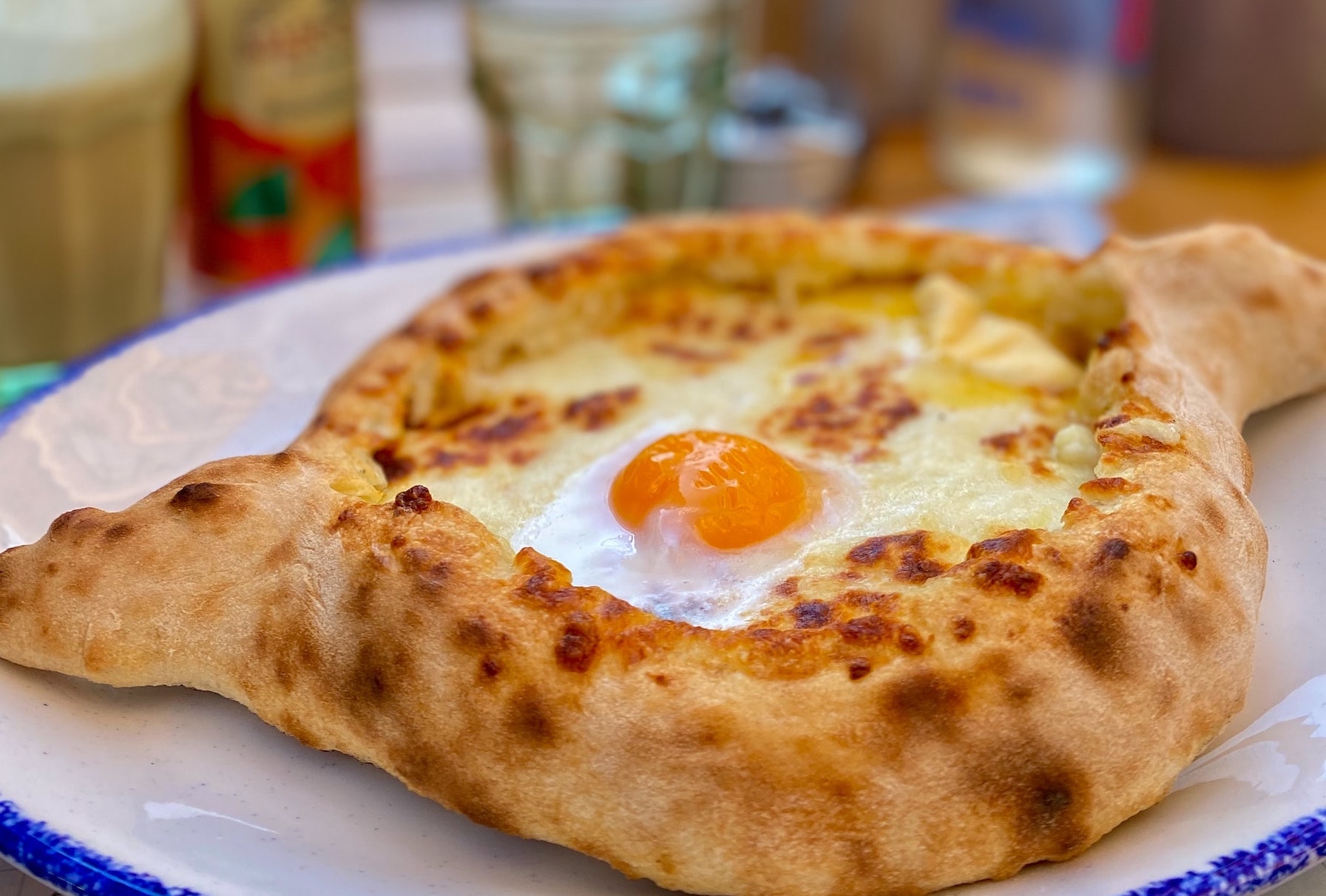
If you try only one Georgian dish, make it khachapuri, the cheese-filled bread that functions as comfort food, national symbol and unofficial measure of the economy all at once. It comes in several regional forms, and learning the differences is half the fun. The everyday version is Imeruli, a round bread with the cheese sealed inside, while Megruli piles extra cheese on top as well. The showstopper is Adjaruli, the boat-shaped khachapuri from the Black Sea region of Adjara, filled with cheese and butter and crowned with a raw egg that you stir into the molten centre before tearing off pieces of the crust to dip. There is also the flaky, layered Achma and, in the mountains, hearty variations stuffed with beans or potato. Each is rich, generous and best eaten hot, ideally with a glass of something to cut through it.
Khinkali and the Art of Eating Them
Georgia's other great icon is khinkali, the pleated soup dumpling that inspires genuine devotion. These twisted parcels are filled with spiced meat, usually a mix of pork and beef, along with a mouthful of hot broth, and there is a correct way to eat them that locals watch for. You pick a dumpling up by its knotted top, bite a small hole in the side, drink the broth first, then eat the rest, leaving the thick topknot on your plate. Reaching for a knife and fork is considered something close to sacrilege. The classic filling is meat, but cheese, mushroom and potato versions exist for vegetarians, and mountain kitchens make their own herb-free variations. Order half a dozen to start, since they are more filling than they look, and pair them with beer or chacha rather than wine, as tradition dictates.
"It feels hauntingly familiar yet utterly new and delicious."
— Anthony Bourdain, Parts Unknown
Walnuts, Aubergine and the Cold Table
Some of the most memorable Georgian dishes never involve meat at all, and they cluster at the start of the meal in a spread of cold appetisers. Walnuts are the thread that runs through them: ground into a paste with garlic, herbs and spices, they fill the rolled aubergine of badrijani nigvzit and bind the vivid vegetable pâtés known as pkhali, which are made from spinach, beetroot, beans or whatever is in season and often studded with pomegranate seeds. For special occasions there is satsivi, poached chicken or turkey in a cool, velvety walnut sauce, a fixture of Georgian New Year tables. Rounded out with fresh herbs, tangy pickles and slabs of cheese, this cold table alone could make a satisfying meal, and it shows off the cuisine's lighter, more aromatic side.
Stews, Skewers and Mountain Cooking
Georgian mains reward a hearty appetite. The most beloved is mtsvadi, skewers of pork or lamb grilled over grapevine cuttings and served simply with raw onion and a sharp plum sauce. Shkmeruli, chicken cooked in an intense garlic and milk sauce, has become a modern favourite, while older dishes like chakhokhbili, a tomato and herb chicken stew, and ostri, a spicy beef stew, show the cuisine's Persian-influenced depth. Beans turn up constantly in lobio, a warming stew usually eaten with cornbread. In the high mountains the food changes again: Svaneti produces kubdari, a spiced meat-filled bread quite unlike the cheese khachapuri of the lowlands, alongside its own cheese-and-cornmeal dishes and the region's famous herbal Svan salt. Seeking out these regional specialities is one of the pleasures of travelling around the country.
Sweets, Bread and Street Food
No account of Georgian food is complete without churchkhela, the chewy sweet that hangs like candles in every market. It is made by threading walnuts or hazelnuts onto a string and dipping them repeatedly in thickened grape juice until they form a dense, energy-packed bar, a natural sweet that has fuelled Georgian travellers and soldiers for centuries. For everyday eating, look for the wood-fired flatbread baked on the walls of a clay tone oven, the cheese boats and bean-filled lobiani sold at bakeries, and the squeaky, mild sulguni cheese that appears in countless forms. These are the foods you graze on between sights, cheap and satisfying, and they give a truer sense of daily Georgian life than any restaurant menu.
Regional Flavours Across Georgia
Part of what makes eating in Georgia so rewarding is how much the food changes as you travel. The humid, subtropical region of Adjara around Batumi gives the country its butter-and-egg boat khachapuri and leans on fish and citrus. Neighbouring Imereti and Samegrelo in the west favour fierier flavours, more chilli and garlic, the spicy ajika paste and the polenta-like elarji, made with cornmeal and stringy sulguni cheese. Move east to Kakheti, the great wine region, and the food turns toward grilled meats, hearty bread and the qvevri wines that accompany every meal. Up in the mountains of Svaneti and the northern valleys, the cooking is built for cold weather and hard work, all meat-stuffed breads, cured hams and pungent local cheeses.
These distinctions matter for planning, because the best way to taste the full range is to eat as you move. A trip that takes in Tbilisi, the wine country of Kakheti and a mountain region such as Kazbegi or Svaneti will hand you three or four quite different culinary worlds within a single week. Local markets are the quickest way to read a region, their stalls piled with the cheeses, spices, pickles and fruits that define the surrounding kitchens. Wherever you go, the hospitality is constant even as the flavours shift, and asking a guesthouse host what is local and in season rarely leads you wrong.
The Supra and Georgian Wine
To understand Georgian food fully, you have to understand the supra, because so many of the country's dishes are designed to be shared across a long, slow feast rather than eaten alone. A supra is far more structured than it first appears. The tamada proposes each toast, often with real eloquence, and the table drinks together in a rhythm that moves from lighthearted to deeply sincere as the evening goes on. Food arrives not in courses but all at once and continuously, plates crowding on top of plates until the table can barely hold them. This abundance is the point, a physical expression of a hospitality that Georgians regard as a sacred duty.
Wine is inseparable from all of it. Georgia's ancient method of fermenting wine in buried clay qvevri earned a place on UNESCO's list of intangible cultural heritage, and the amber and red wines it produces are made to be drunk with food rather than admired in isolation. Alongside wine you will meet chacha, the potent grape spirit distilled from the leftovers of winemaking and downed in a single gulp when a toast demands it. A meal in a Kakheti family cellar, where the wine is poured straight from the qvevri and the food comes from the garden, is the fullest expression of this culture and one of the most rewarding experiences the country offers.
Looking for a Tour?
Taste Georgia properly — traditional dishes, local markets and hands-on culinary experiences with guides who know where the best food hides.
Explore the Georgian Cuisine Tour →
Practical Information for Eating in Georgia
Eating well in Georgia is easy and remarkably cheap. A full lunch at a local restaurant costs a modest sum, and the best food is often found not in the tourist-facing places on the busiest streets but in unassuming family-run spots where locals eat. As a rule, wander a street or two away from the main sights and prices halve while quality rises. Markets and bakeries make excellent, inexpensive stops for grazing, and street snacks like khachapuri and churchkhela are ideal for travel days. Carrying a little cash is wise, since smaller establishments and market stalls do not always take cards.
Travel Tip
Learn the khinkali ritual before your first plate arrives: lift by the topknot, bite a small hole, sip the broth, then eat the rest and leave the knot behind. Doing it right earns a nod from the kitchen, and it keeps the precious broth off your shirt. Save the wine for other dishes and drink beer or chacha with your dumplings, as Georgians do.
Timing and seasons shape what you eat. Autumn, and especially the September and October grape harvest known as rtveli, is the most atmospheric time to visit, when markets overflow with produce and families gather for feasts and winemaking. Vegetarians and vegans eat unusually well year-round thanks to the wealth of walnut, bean, aubergine and herb dishes, many of which developed around the Orthodox fasting calendar, though it is worth learning the phrase for meat-free just in case. Tap water is generally safe to drink in Tbilisi and most towns, and Georgia's celebrated mineral waters, such as the famously salty Borjomi, are worth trying at least once.
A few points of etiquette smooth the experience. Hospitality here is sincere and insistent, so pace yourself early in a long meal and be ready for your glass to be refilled the moment it empties. If you are invited to a supra, follow the lead of the tamada rather than drinking freely between toasts, and take toasting seriously, since these are heartfelt rather than casual. Tipping around ten per cent is appreciated in restaurants. Above all, arrive with an open mind and an empty stomach, because the surest way to offend a Georgian host is to leave the table hungry.
Georgian food opens up fastest to travellers who have someone to guide them past the obvious. Our local guides know which family cellar in Kakheti pours the best qvevri wine, which Tbilisi bakery fires the freshest khachapuri and which mountain guesthouse still makes kubdari the old way. They can translate not just the menu but the customs of the supra, so a meal becomes an encounter rather than a transaction.
We keep our groups small and our itineraries flexible, whether you want a focused culinary journey through the wine country, a market-and-cooking day in Tbilisi or a wider trip that weaves great food into a tour of the mountains and the coast. Comfortable transport means you can taste freely without worrying about the drive, and our focus stays on authentic experiences rather than staged ones. The goal is simple: to help you eat, drink and understand Georgia the way Georgians do.
Conclusion
Georgian food is not a side attraction to a trip through the Caucasus but one of its central pleasures, a cuisine of extraordinary depth, generosity and character that stays with travellers long after they leave. From the first molten bite of khachapuri to a long, wine-soaked supra in a Kakheti cellar, eating here is an education in a culture that has treated hospitality as an art for millennia. Follow the food from the cheese boats of the Black Sea coast to the meat breads of the high mountains and you will understand the country far better than any monument could teach you. Come with an appetite, and let Georgia do the rest.
What is the most famous Georgian dish?
Khachapuri, the cheese-filled bread, is the most famous and beloved Georgian dish, often described as the national food. It comes in several regional forms, from the round, sealed Imeruli to the boat-shaped Adjaruli topped with butter and a raw egg. Running it close is khinkali, the spiced soup dumpling that has its own ritual of eating. Both are staples you will find almost everywhere, from humble canteens to smart restaurants, and both are excellent introductions to the cuisine. Beyond these two icons lies a much deeper repertoire of walnut dishes, stews, grilled meats and sweets, so while khachapuri is the obvious starting point, it is only the beginning of what Georgian food has to offer.
Is Georgian food good for vegetarians?
Yes, Georgia is one of the more vegetarian-friendly destinations in the region, which surprises many visitors. A large share of the cuisine is naturally meat-free, thanks to the Orthodox fasting tradition that shaped it. Walnut-based dishes like badrijani and pkhali, bean stews such as lobio, cheese breads, aubergine and mushroom dishes and an abundance of fresh herbs and salads mean vegetarians can eat richly and varied. Even khinkali comes in cheese, mushroom and potato versions. Vegans should learn to ask for dishes prepared for the fasting period, which are made without any animal products. With a little knowledge of the menu, plant-based travellers rarely go hungry and often eat better here than they expected.
How much does it cost to eat in Georgia?
Georgia is very affordable for food by European standards, which is part of its appeal. A full, satisfying lunch at a local restaurant typically costs only a modest sum, individual khinkali are cheap by the piece and street snacks like khachapuri and churchkhela cost very little. Tourist-facing restaurants on the busiest streets charge noticeably more, so eating where locals eat, often just a block or two away, both saves money and improves quality. Markets and bakeries offer excellent value for grazing and travel days. Carrying some cash is sensible, as smaller places and market stalls may not accept cards, but overall a traveller can eat extremely well here on a small daily budget.
What should I drink with Georgian food?
Wine is the natural partner to most Georgian meals, and the country's ancient qvevri wines, both the amber whites and the bold Saperavi reds, are made specifically to be drunk with food. With khinkali, however, tradition calls for beer or chacha, the strong grape spirit, rather than wine. Chacha appears throughout a supra, downed in a single gulp when a toast demands it. For non-drinkers, Georgia produces excellent mineral waters, including the distinctive salty Borjomi, along with fruit lemonades in flavours like tarragon and pear. Tap water is generally safe in Tbilisi and most towns. Whatever you choose, expect your glass to be refilled generously, especially if you find yourself at a family table.
Where is the best place to experience Georgian food?
For the fullest experience, combine several settings. Tbilisi offers the widest range, from traditional restaurants to a fast-evolving modern dining scene and countless bakeries and khinkali houses. The wine region of Kakheti is where you will find the most authentic supra experiences, often in family cellars where the wine is poured from the qvevri and the food comes straight from the garden. The mountains of Svaneti and Kazbegi serve hearty regional specialities you will not find in the lowlands. Markets everywhere are the quickest way to understand a region's ingredients. A trip that links the capital, the wine country and a mountain area delivers the broadest and most rewarding taste of the cuisine.