This Mtskheta and Jvari Monastery tour from Tbilisi takes you to the spiritual heart of Georgia in a single private day. You will stand on the hilltop where, by tradition, Christianity took root in the country, explore the great cathedral of Svetitskhoveli in the ancient capital below, and then return to Tbilisi to cross the Peace Bridge and ride the cable car up to Narikala Fortress.
It is an ideal first trip out of the capital: the distances are short, the history is deep, and the views are some of the finest in the region. It suits anyone with an interest in Georgian history and faith, as well as families and older travellers who want a full day without long hours in the car. Your guide can go into as much or as little detail as you like.
Highlights of the route
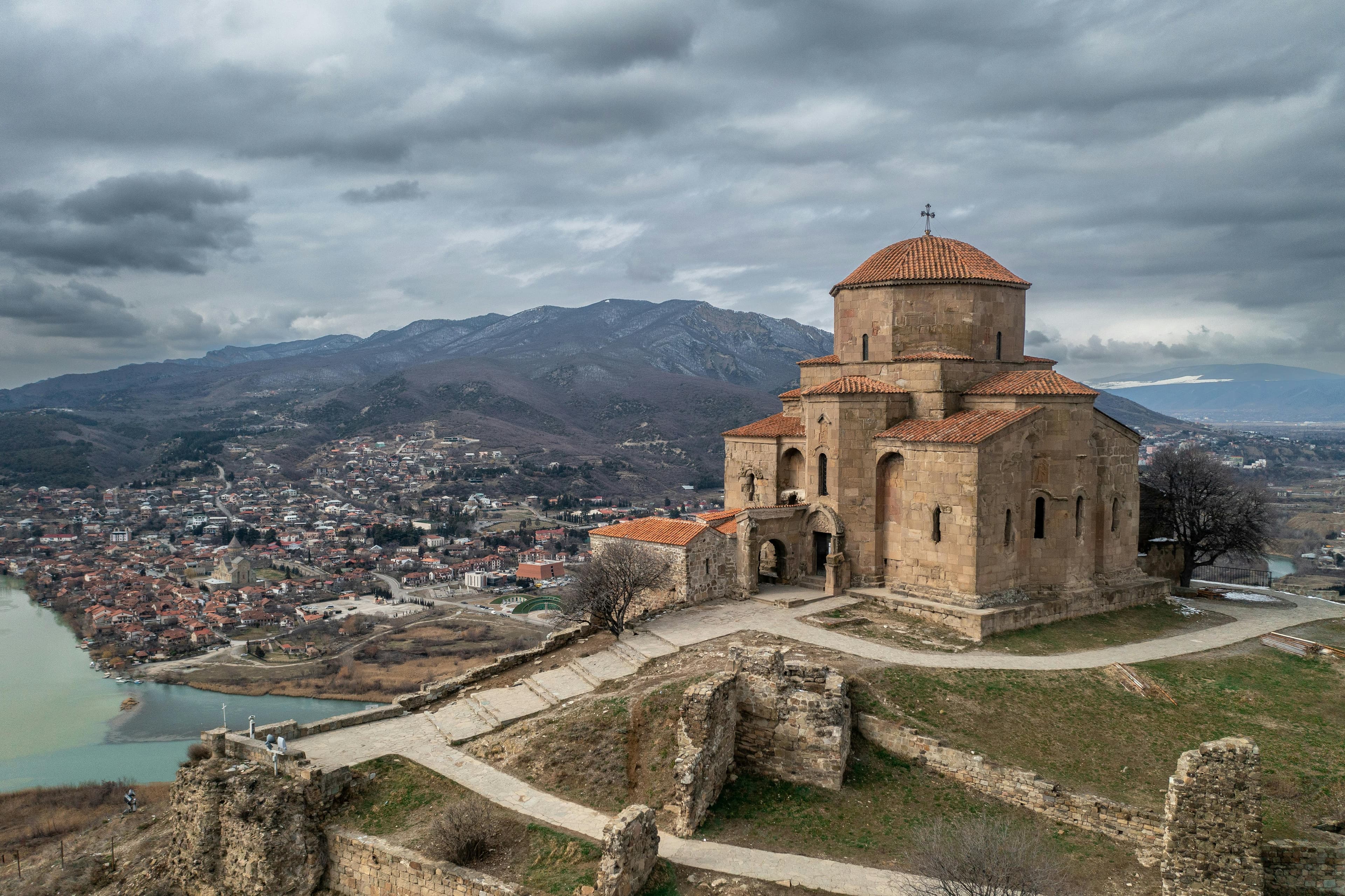
Jvari Monastery
Jvari sits on a rocky hilltop above the point where the Mtkvari and Aragvi rivers meet, and the view down over Mtskheta is one of the best known in Georgia. Tradition holds that St Nino, who brought Christianity to Georgia in the 4th century, raised a great wooden cross on this spot; "jvari" simply means "cross". The church that stands here now dates from around the turn of the 7th century, and its compact, four-apsed design became a model for churches across the Caucasus. Inside it is plain and atmospheric, with the base of the original cross still at its centre. It is exposed to the wind, so bring a layer.
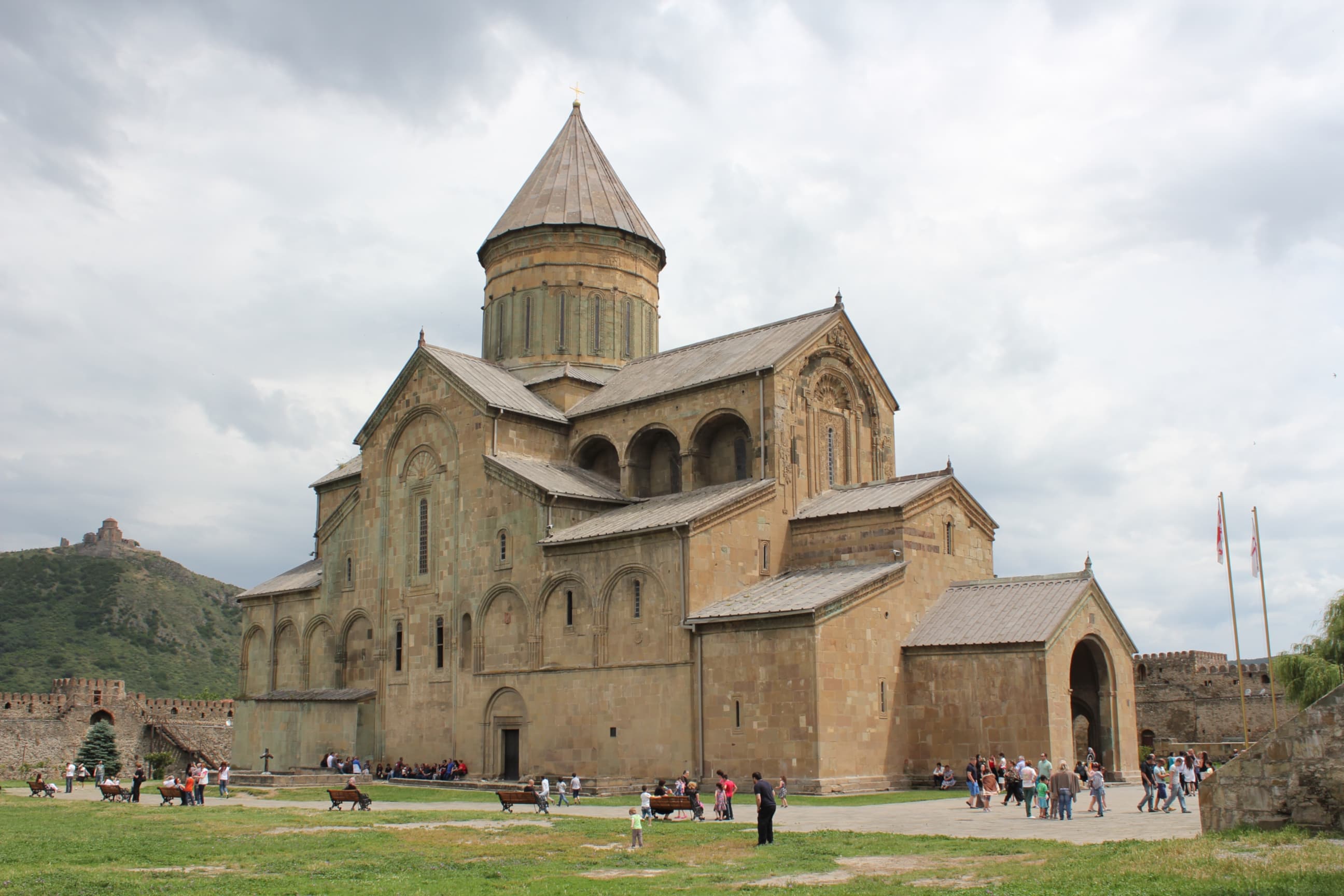
Svetitskhoveli Cathedral
Mtskheta was the capital of the ancient kingdom of Kartli for centuries, and Svetitskhoveli is the reason it remains Georgia's spiritual centre. The present cathedral was built in the 11th century on the site of much older churches, and tradition says Christ's robe is buried beneath it; the name means "life-giving pillar". Many Georgian kings are buried here too. Together with Jvari, it forms part of the Historical Monuments of Mtskheta, a UNESCO World Heritage Site. Inside, look for the frescoes, the royal tombs and the pillar that gives the cathedral its name, and allow time afterwards for the lanes around it, where stalls sell churchkhela, honey and local crafts. It is an active church, so dress modestly.
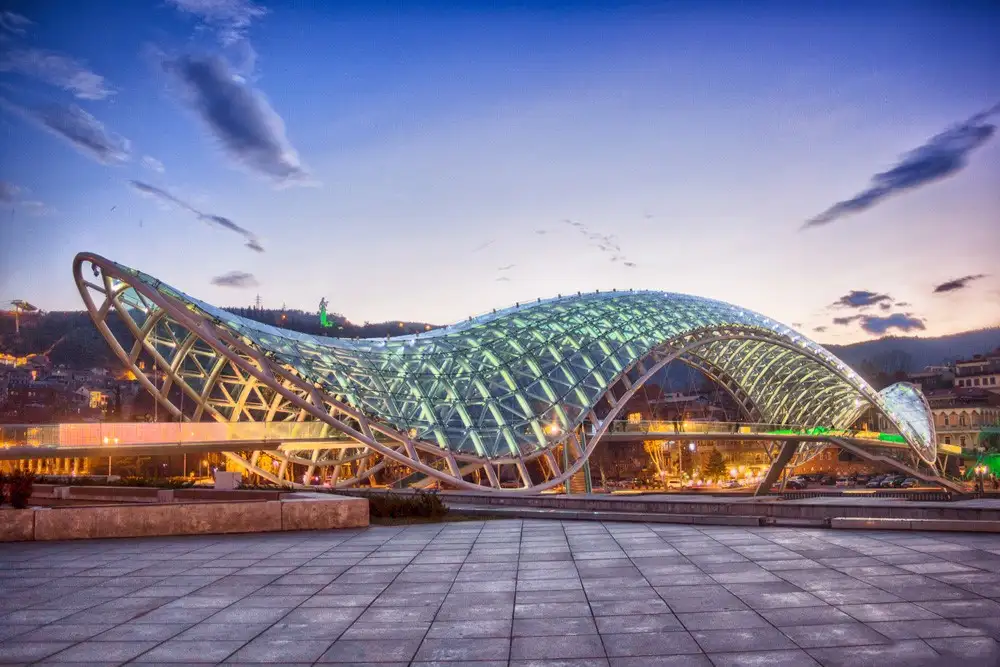
Bridge of Peace
Back in Tbilisi, the Bridge of Peace is the city's most striking piece of modern design: a curving pedestrian bridge of glass and steel over the Mtkvari, opened in 2010 and designed by the Italian architect Michele De Lucchi. It links the Old Town with Rike Park. Walking across, you have Narikala Fortress above you, the Metekhi church on its cliff and the domes of the sulphur baths downstream. After dark, the canopy is lit up with patterns of LED lights. If your timing allows, cross it at dusk, when the river and the Old Town lights make it worth lingering.
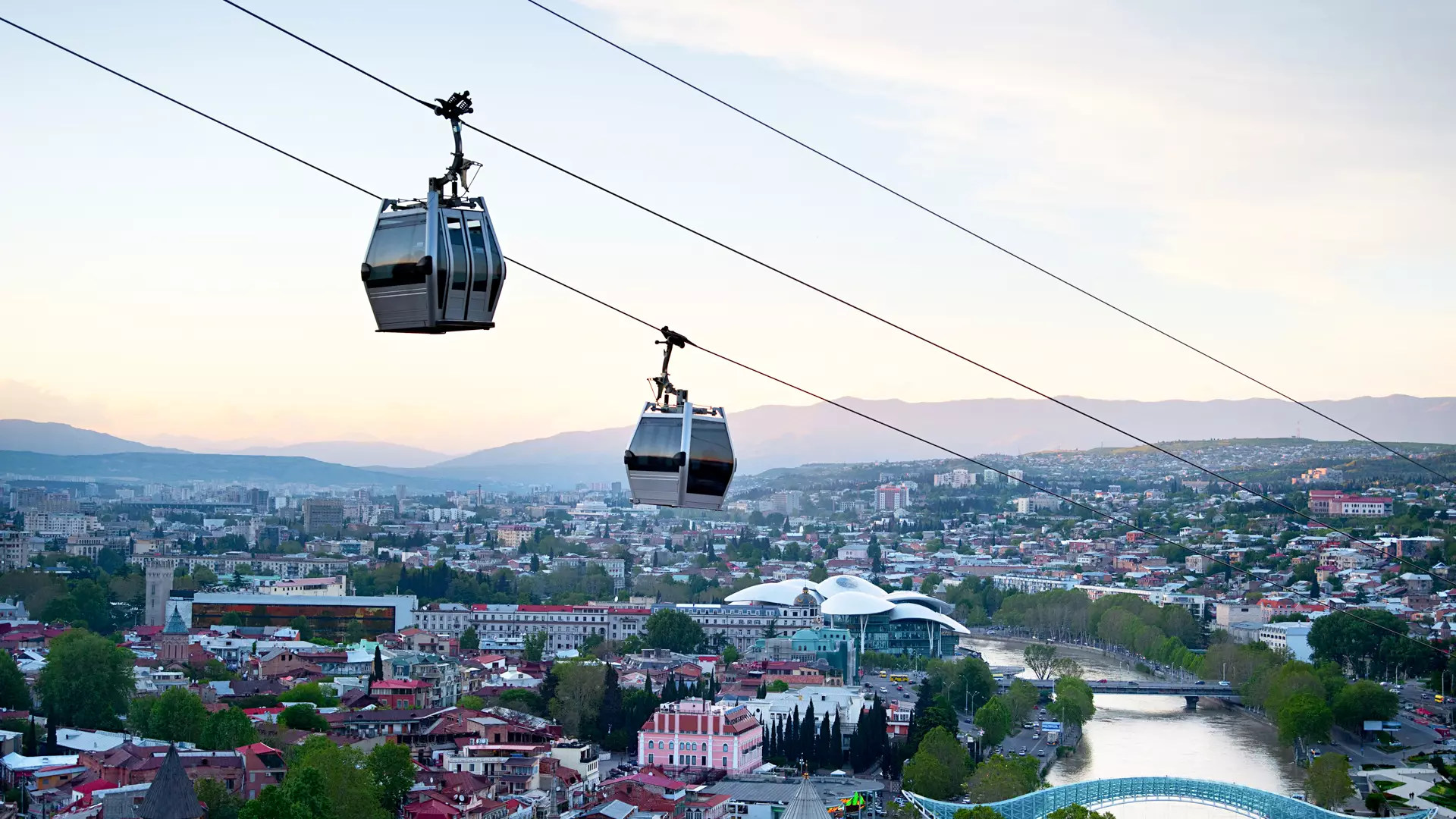
Tbilisi Cable Car
From Rike Park, the cable car lifts you across the river and up to Narikala Fortress in a few minutes, with the whole Old Town opening out beneath the cabin. At the top, you can walk along the ridge to Kartlis Deda, the Mother of Georgia statue, who holds a bowl of wine for friends and a sword for enemies, and explore the walls of Narikala, a fortress whose origins go back to the 4th century. The views take in the sulphur baths, Sameba Cathedral and the hills that ring the city. Many people then walk back down through the Old Town, which is easy on the legs.
Make it your own
This route is a starting point, and we are happy to reshape it. History lovers can add Samtavro Convent in Mtskheta, linked by tradition to St Nino, or continue west to the cave town of Uplistsikhe. If you are heading into the mountains, Mtskheta sits near the start of the Georgian Military Road, so it combines well with Ananuri Fortress and Kazbegi; see our other day trips from Tbilisi for ideas.
If you would rather keep things gentle, we can skip the Tbilisi stops and give Mtskheta a slower afternoon with a long lunch. Travellers who want more time in the capital often pair this day with our Tbilisi city tour. Guides are available in English, Russian and Georgian, and if you are staying longer, a private tour guide in Tbilisi can link several days into one plan.
Good to know
- Jvari and Svetitskhoveli are active churches. Cover shoulders and knees; women should bring a headscarf.
- Jvari's hilltop is windy in every season. A light jacket is worth carrying even on warm days.
- Spring and autumn are the most comfortable times to visit, but this is a year-round trip; read our month-by-month guide for more.
- Bring some cash in lari for the stalls around Svetitskhoveli, where churchkhela and honey make good souvenirs.
Send us your dates, group size and where you are staying on WhatsApp, and we will put together a route and a quote for your day in Mtskheta.