This Tbilisi city tour brings together the capital's most rewarding sights in one private day: the lanes and carved wooden balconies of Old Tbilisi, the gold-domed Sameba Cathedral, the hilltop park on Mtatsminda and the towering Chronicles of Georgia on the city's northern edge. It is just your group, your guide and transport between the stops, at the pace that suits you.
It works especially well as a first day in Georgia, before you head for the mountains or the wine country. Families and older travellers are well looked after, because the walking can be kept as light or as long as you like. With a guide who grew up here, a pretty city becomes one you actually understand.
Highlights of the route
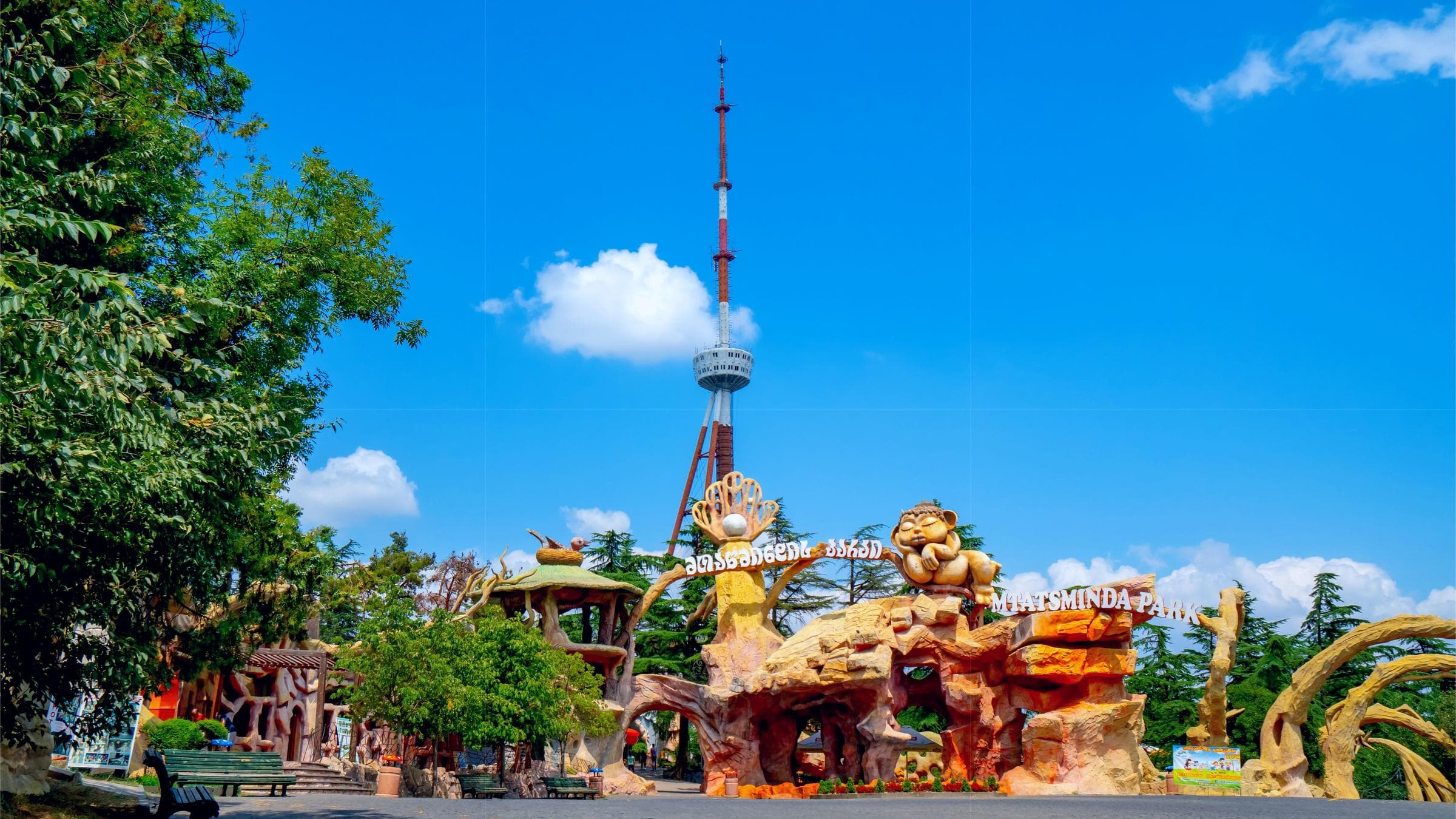
Mtatsminda Park
Mtatsminda, the "Holy Mountain", rises straight above the city centre, and the amusement park on its summit has been a Tbilisi favourite for generations. A funicular has climbed this slope since the early 20th century, and at the top you can wander between the Ferris wheel, the rides and terraces that look across the whole city to Sameba's golden dome. Partway up is the Mtatsminda Pantheon, resting place of many of Georgia's best-loved writers; ask your guide if you would like to stop. Late afternoon is the best time to be up here, when the light softens over the rooftops.
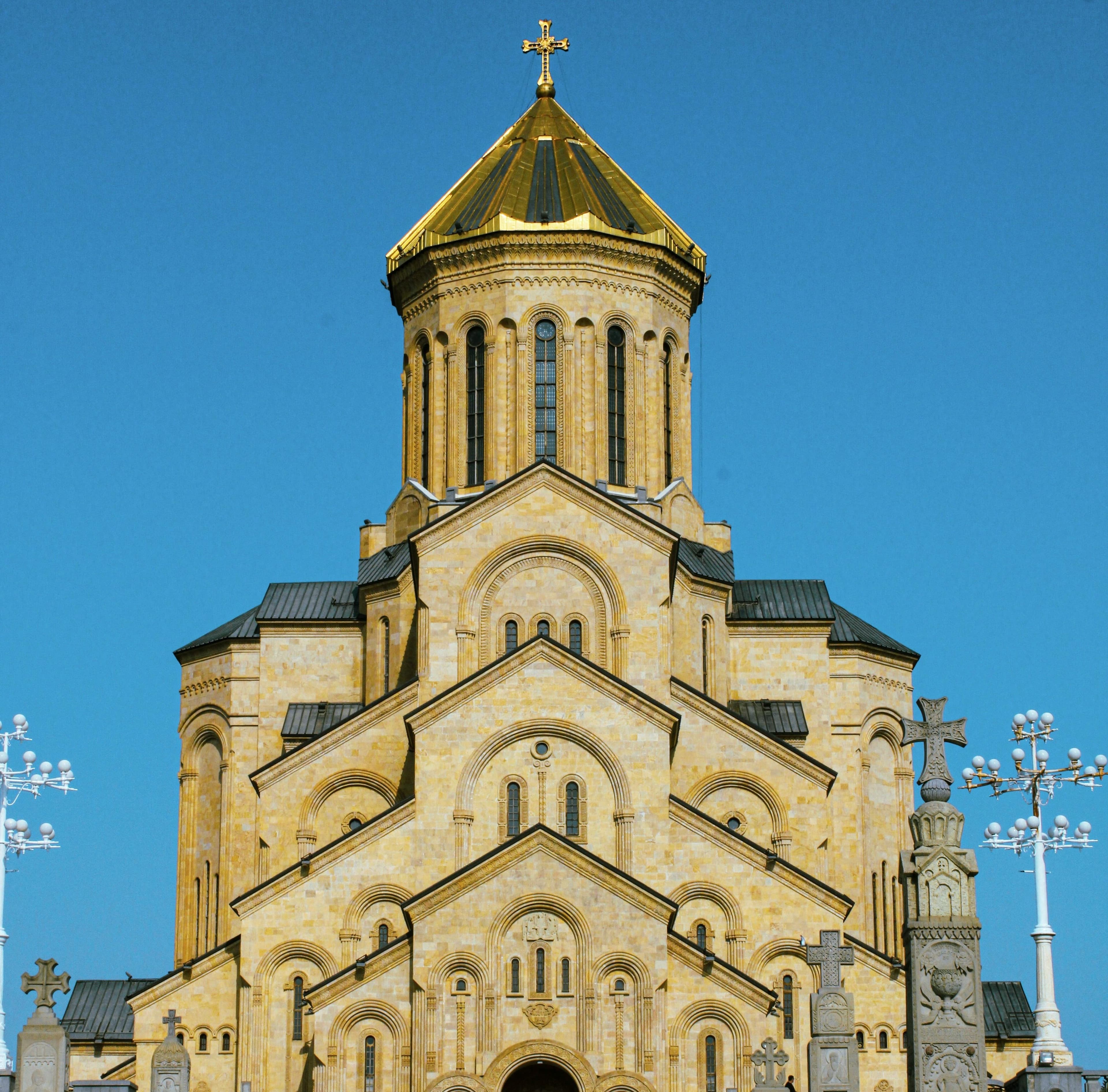
Sameba Cathedral
The Holy Trinity Cathedral, known to everyone as Sameba, was consecrated in 2004 and is one of the tallest Orthodox cathedrals in the world. It stands on Elia Hill in the old Avlabari district, and its gilded cross can be seen from almost anywhere in Tbilisi. Although modern, it follows the traditional Georgian style. Inside, the space is vast and quiet, lit by candles and hung with icons. It is a working church, so dress modestly and keep your voice low during services.
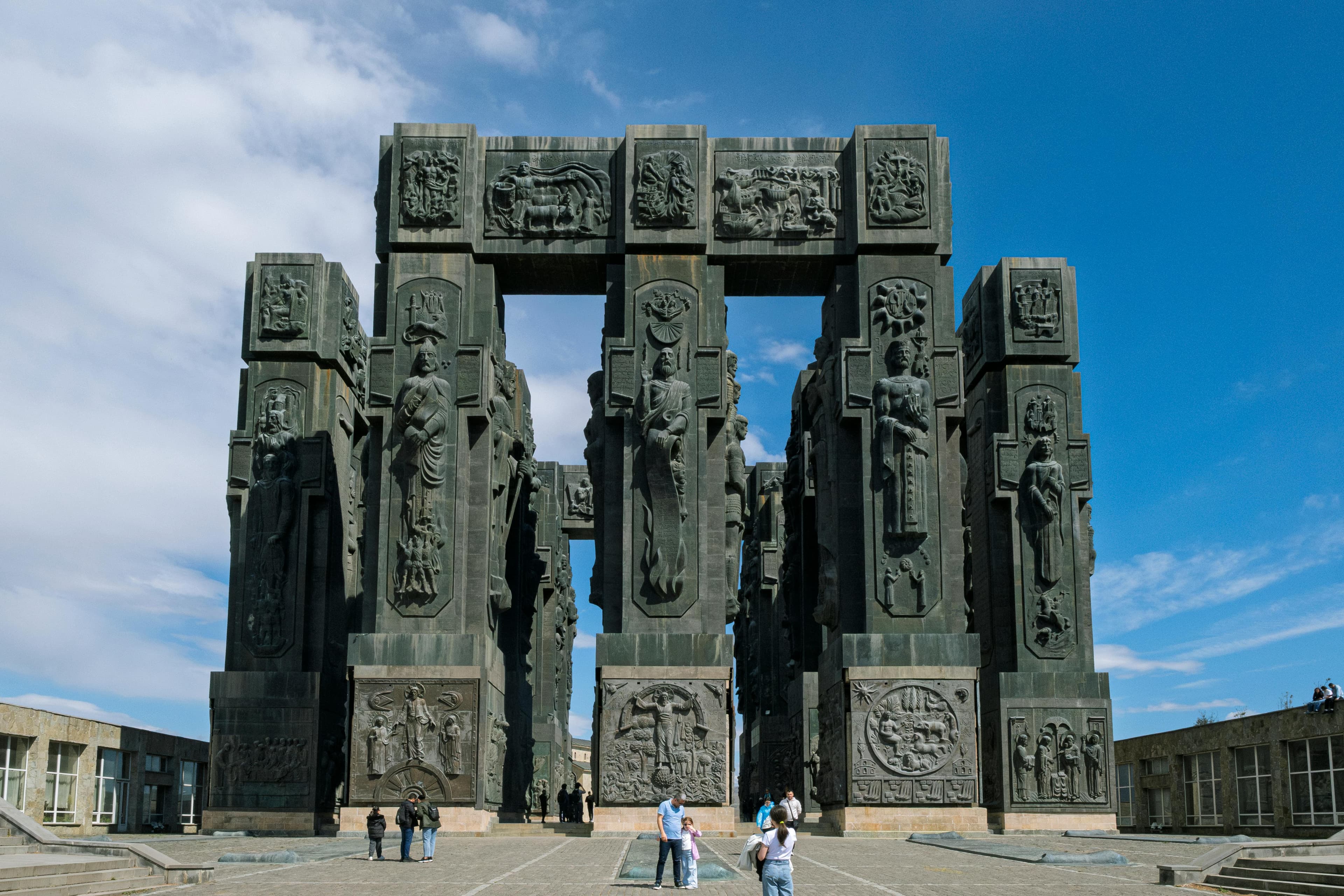
Chronicles of Georgia
On a hillside above the Tbilisi Sea reservoir, on the city's northern outskirts, stand sixteen enormous bronze pillars by the sculptor Zurab Tsereteli. Begun in the mid-1980s and never entirely finished, the monument tells the story of Georgia: the upper sections show kings, queens and heroes from the nation's past, while the lower panels depict scenes from the life of Christ. Some locals call it Georgia's Stonehenge. Climb the steps for wide views over the water and the north of the city while your guide points out who is who. The site is exposed, so bring a layer on cooler days and a hat in summer.
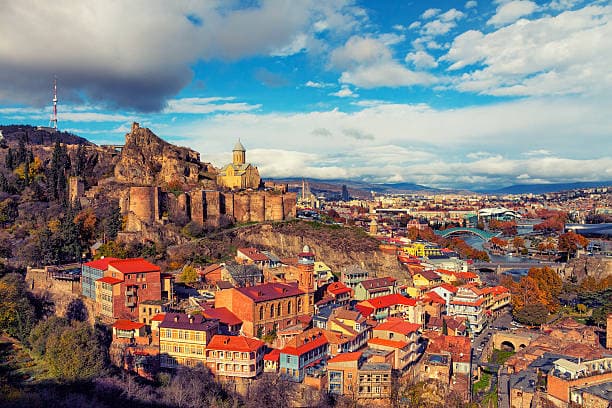
Old Tbilisi
The heart of the day is a walk through the Old Town. Legend says King Vakhtang Gorgasali founded the city in the 5th century after his falcon fell into a hot spring here, and the name Tbilisi comes from the Georgian word for "warm". You can still see those springs at work in the brick-domed sulphur baths of Abanotubani. From there the lanes climb past churches, mosques and synagogues, crooked houses with carved wooden balconies, and the slopes below Narikala Fortress. Depending on your interests, your guide can take in the 6th-century Anchiskhati Basilica, the oldest surviving church in the city, or the leaning clock tower beside the Gabriadze puppet theatre. The streets are steep and cobbled in places, so comfortable shoes matter.
Make it your own
Treat this route as a starting point: if you would rather walk less, we can drive more of the day and take the cable car up to Narikala instead of climbing. If you have energy to spare, we can add a private room at the sulphur baths, a wine tasting in one of the city's wine bars, the art and flea market at the Dry Bridge. Food lovers often pair this day with our Georgian food tour.
Tbilisi also combines naturally with the ancient capital of Mtskheta just outside the city, or the city can be spread over two relaxed days. Flying in late? We can meet you with a Tbilisi airport transfer at any hour and start the next day. Prefer a Russian- or Georgian-speaking guide? Just say so. For more ideas on what to see, read our first-timer's guide to Tbilisi, or see how a private tour guide in Tbilisi can shape a longer stay.
Good to know
- The Old Town is hilly and many streets are cobbled. Wear shoes with good grip, especially after rain.
- In churches, cover shoulders and knees; women are expected to cover their hair. A light scarf in your bag solves most of this.
- July and August can be very hot in Tbilisi, so in summer we plan shaded walks and indoor stops for the middle of the day. Spring and autumn are the most comfortable.
- Cards are widely accepted in the centre, but carry some cash in lari for bakeries, markets and small purchases.
Message us on WhatsApp with your dates, your group size and where you are staying, and we will come back with a route and a quote for your day in Tbilisi.