This Vardzia and Rabati Fortress day trip takes you into Samtskhe-Javakheti, Georgia's rugged south, to see two of the country's most striking historic sites: a restored fortress town where churches and a mosque stand side by side, and a cave monastery cut into a cliff above the Mtkvari River more than eight centuries ago. It is a private tour, so the day moves at your pace with your own guide.
It suits travellers who love history and archaeology, photographers, and anyone who wants to see a side of Georgia that is quite different from the vineyards of the east or the high Caucasus. The drive itself is part of the pleasure, running through gorges, past small villages and medieval fortresses.
Highlights of the route
Rabati Fortress
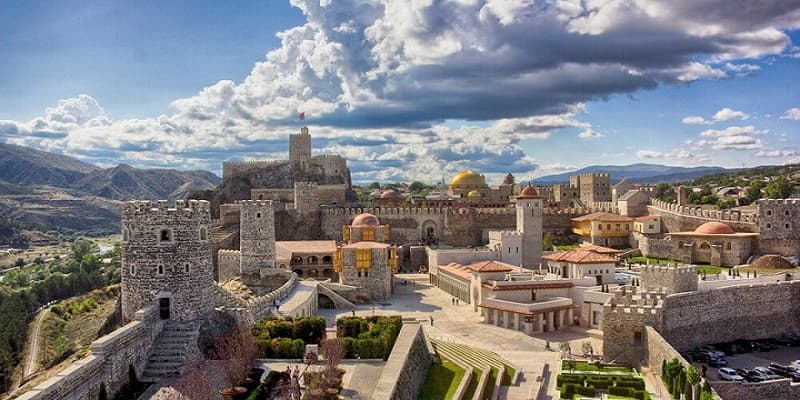
Rabati is the fortified old quarter of Akhaltsikhe, a town that changed hands many times and spent long periods under Ottoman rule. The complex was extensively restored and now gathers a citadel, a mosque with a gilded dome, a church, defensive walls and courtyards in one walled area, a vivid picture of the region's layered past. Climb to the ramparts for views over the town and the hills beyond, and allow time for the local history museum inside if you are curious. The paths are well kept but involve stairs, so pace yourself before the bigger climb at Vardzia.
Vardzia
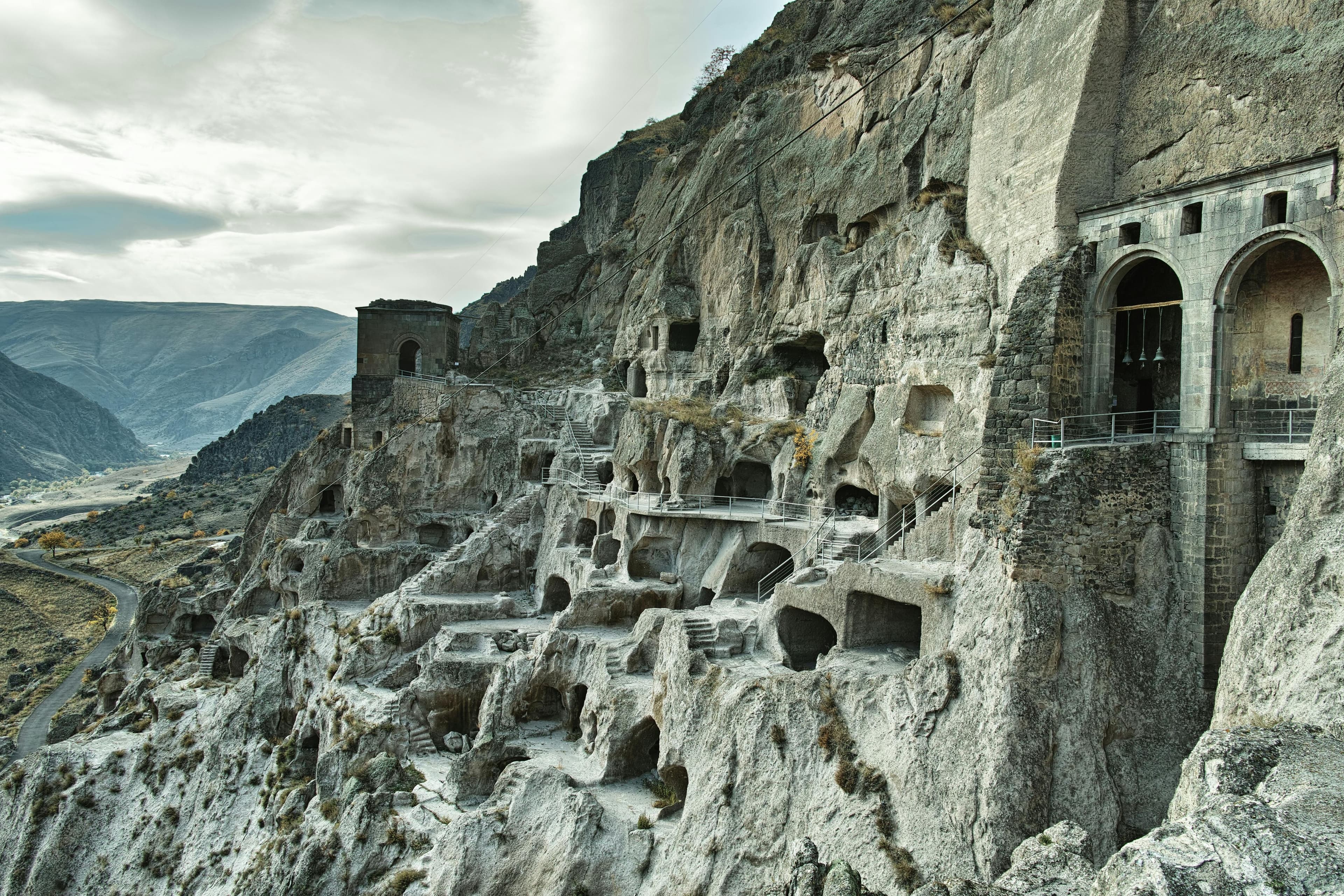
Vardzia was carved into the Erusheti cliff in the 12th century, begun under King George III and completed under Queen Tamar, one of the most celebrated rulers in Georgian history. It held hundreds of rooms across several levels: chapels, living quarters, wine cellars, stables and a sophisticated water system. An earthquake in the 13th century tore away much of the cliff face, leaving the interiors open to the valley as you see them now. The highlight is the Church of the Dormition, where frescoes include a portrait of Queen Tamar. A small community of monks still lives here. Expect steps, tunnels and uneven rock; your guide will choose a route that suits your group, and good shoes make it far more enjoyable.
Make it your own
The south rewards a slower pace. Rather than one long day there and back, many travellers add an overnight stay in Akhaltsikhe or Borjomi, which turns the trip into a relaxed two days and leaves room for more. Ask us about adding Khertvisi Fortress, which guards a river junction on the road to Vardzia, or the nearby Sapara Monastery, tucked into a forested gorge near Akhaltsikhe. You can also combine this route with our Borjomi and Bakuriani tour for a few days in the region's mountains and mineral-water towns.
Guides speak English, Russian and Georgian. For families or older travellers we can limit the walking at Vardzia to the main church and the most accessible levels, and build in proper breaks for meals. If you prefer to travel more freely, a private driver in Georgia can take you on your own schedule, and our page on day trips from Tbilisi shows other routes out of the capital.
Good to know
- Wear sturdy, grippy footwear: the cave passages are uneven and some steps are steep.
- Vardzia is an active monastery. Cover shoulders and knees, and women may wish to bring a scarf for the church.
- The south is hot and exposed in summer, so bring water and sun protection; in winter it is cold, and days are short.
- Spring and autumn are especially comfortable for walking. Our month-by-month guide can help you pick dates.
- Some small cafés and roadside stalls take cash only, so it is handy to carry some lari.
Send us a WhatsApp message with your dates, group size and where you are staying, and we will suggest the best way to fit Vardzia into your trip.