This Uplistsikhe and Gori tour with wine tasting is a day of contrasts in Shida Kartli, the region just west of Tbilisi: a rock-cut town that was already ancient when Christianity reached Georgia, a museum that tells the story of the country's most controversial son, and a relaxed tasting of the region's wines to close the day. It is a private tour with your own guide, set at whatever pace suits your group.
It suits curious travellers who like their history with a few layers to it, and it works well as a first trip out of the capital because the drive is straightforward. Families enjoy scrambling around the caves, and anyone interested in the 20th century will find plenty to talk about in Gori.
Highlights of the route
Uplistsikhe
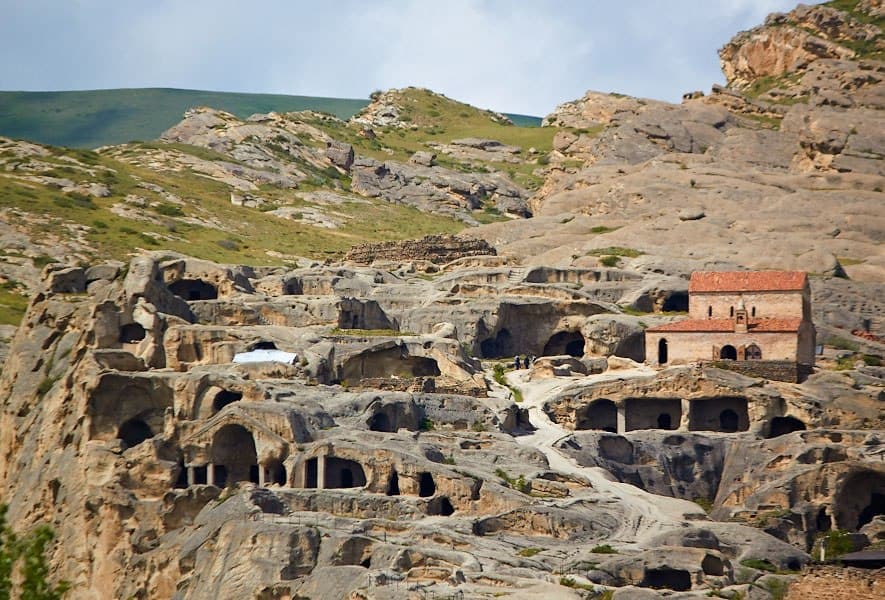
Uplistsikhe, whose name means "the lord's fortress", is a town carved into a rocky ridge above the Mtkvari River. People lived here from the early Iron Age, and it became a major pagan religious centre and a trading stop on routes connected to the Silk Road. You walk along rock-cut streets between halls, dwellings, wine cellars and what may have been a theatre, then climb to a later Christian basilica at the top for wide views over the valley. A tunnel once led down to the river for water. The rock can be slippery, especially after rain, so wear shoes with good grip.
Stalin Museum
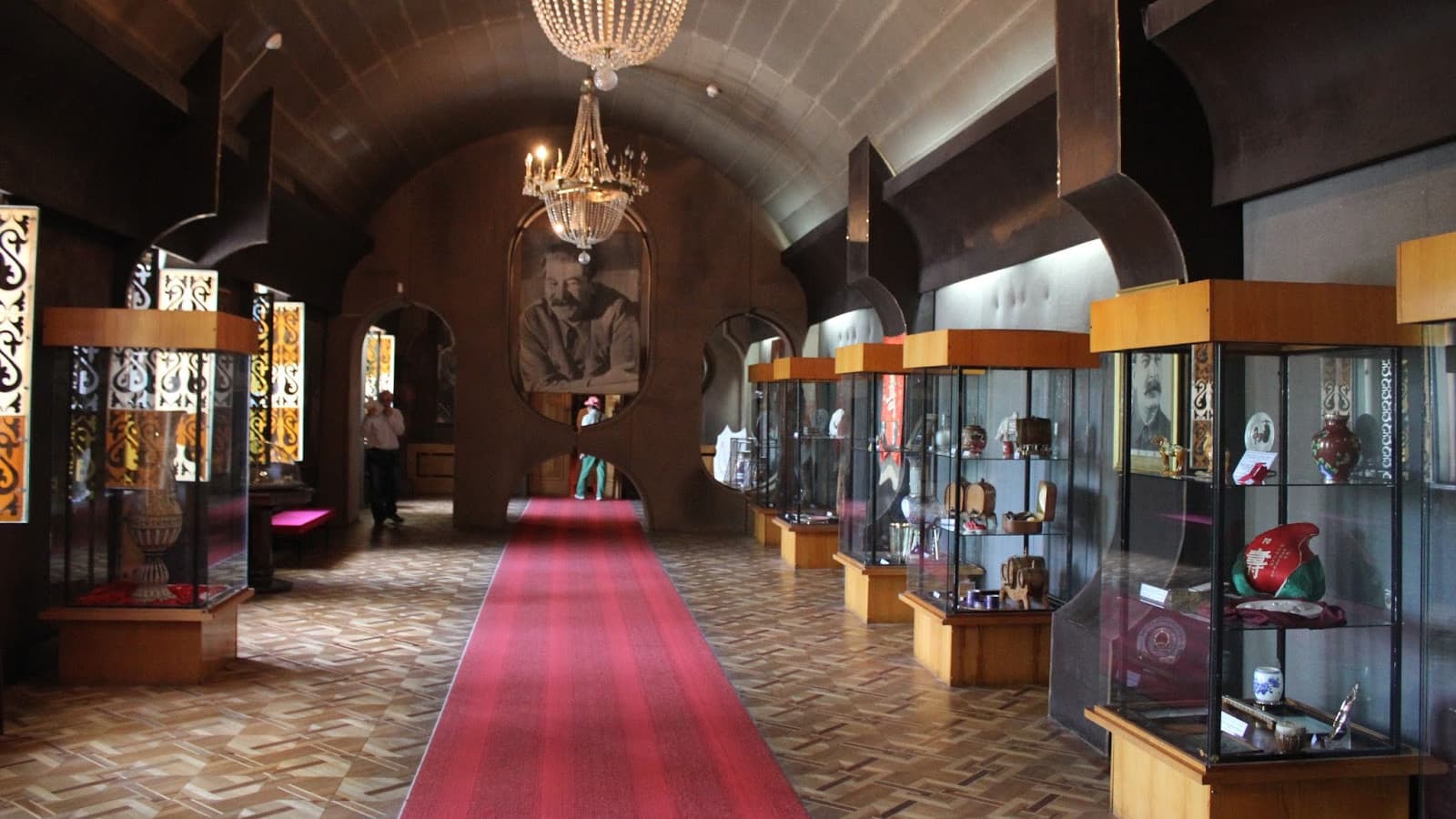
The Stalin Museum in Gori is dedicated to Joseph Stalin, who was born in the town. The grounds preserve the small house where he was born, now sheltered under a pavilion, and the green railway carriage in which he travelled. Inside, the exhibition of photographs, documents and personal items largely reflects its Soviet-era origins and presents a far from complete picture of his rule. Many visitors find it thought-provoking for exactly that reason. Your guide can add historical context and answer questions, and if you would rather spend the time elsewhere, simply let us know.
Wine degustation
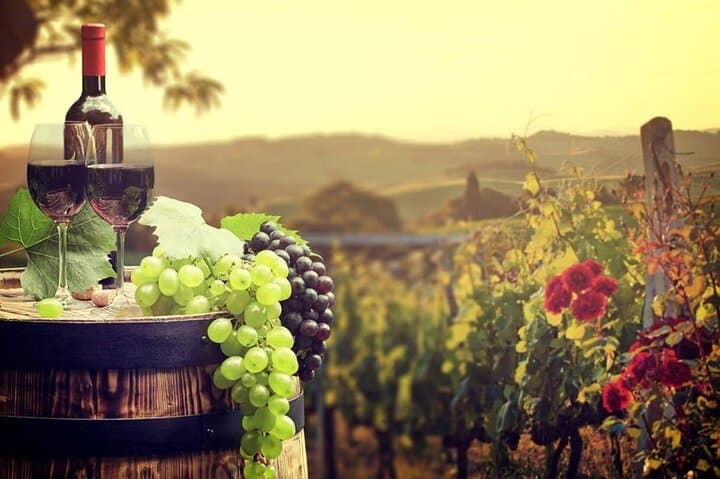
After a day of history, the tasting is a chance to slow down. Georgia has one of the oldest winemaking traditions in the world, and its method of fermenting wine in large clay vessels called qvevri is recognised by UNESCO as intangible cultural heritage. Kartli's wines tend to be lighter and fresher than the bold reds of Kakheti, which makes this an interesting comparison if you plan to visit both regions. Your guide can talk you through what is in the glass and how it was made. Non-drinkers are always welcome.
Make it your own
This route is a starting point. Many travellers add Mtskheta, the ancient former capital, on the way out or back, combining this trip with highlights of our Mtskheta tour such as Jvari Monastery and Svetitskhoveli Cathedral. You could also ask us about Ateni Sioni, a 7th-century church in a quiet valley south of Gori, or the fortress on the hill above Gori itself.
If you are heading west afterwards, towards Borjomi, Vardzia or Kutaisi, this route fits neatly into the first day of a longer journey, with an overnight stay along the way. Guides speak English, Russian and Georgian, and we can keep the walking light for older travellers or young children. For more ideas, see our day trips from Tbilisi or hire a private tour guide in Tbilisi for a city day before or after.
Good to know
- Uplistsikhe is exposed, with little shade, so bring water, a hat and sun protection in summer.
- Shoes with good grip make a real difference on the smooth rock surfaces.
- If you are curious about Georgian wine before you go, our guide to Georgian wines is a good primer.
- Spring and autumn are the most comfortable seasons for walking around the caves.
Message us on WhatsApp with your dates, where you are staying and how many of you are travelling, and we will send a suggested plan and a quote.